-
Prep Time: 10 Minutes
-
Cook Time: 6 Hours (Low) or 3 Hours (High)
-
Total Time: 6 Hours 10 Minutes
-
Yield: 6 generous servings
-
Dietary Notes: Vegan, Vegetarian, Gluten-Free (ensure broth is certified), Dairy-Free, Low-Calorie, Nut-Free.
The Philosophy of the Four Ingredients
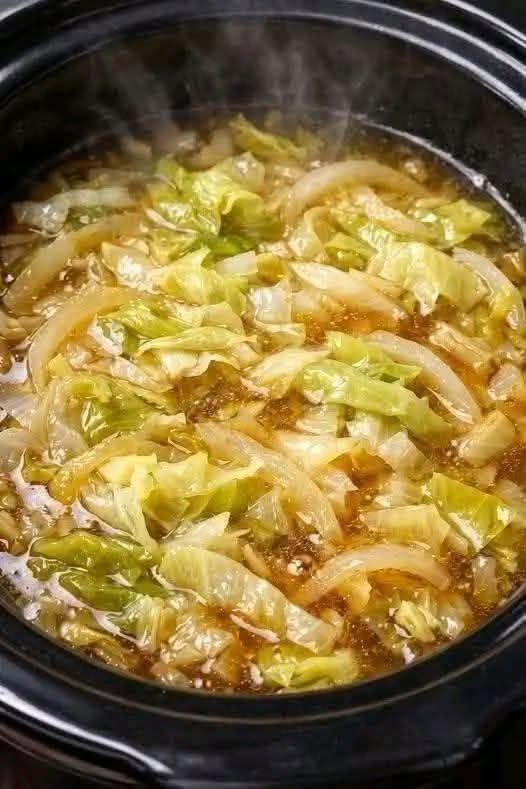
Before we dive into the specifics, it is important to understand why this works. Cabbage and onions are humble, but they are powerhouses of flavor. When cooked slowly, the onions release their natural sugars and caramelize without needing added sugar. The cabbage becomes incredibly tender, sweet, and silky, losing its sharp, peppery bite. The liquid—whether you choose vegetable broth for a vegan version or beef broth for a heartier flavor—acts as the carrier, infusing the vegetables with savory depth. This recipe is a testament to the idea that simplicity often yields the most sophisticated flavors.
The Ingredients
This recipe relies on four core ingredients. However, to make it truly delicious, we rely on pantry staples (oil, salt, pepper, and optional herbs) to enhance the natural flavors. Here is the breakdown:
The Core Four
-
1 Large Head of Green Cabbage (approx. 2 to 2.5 lbs): You can use savoy cabbage or even red cabbage if you prefer, though green cabbage yields the most classic, sweet flavor. Remove the tough outer leaves and the core, then chop it into bite-sized pieces. You want a large volume; it will cook down significantly.
-
2 Large Yellow Onions: Yellow onions are the workhorses of the kitchen, offering the perfect balance of sweetness and pungency. Slice them into half-moons. Do not use red onions for this, as they can turn the soup an unappealing color.
-
6 Cups of Liquid (Broth/Stock): This is your flavor base. Use a high-quality vegetable broth for a vegan soup, or a low-sodium chicken or beef broth. If you want a richer flavor, use 4 cups of broth and 2 cups of water, but ensure the broth is strong. Tip: If using water, add an extra bouillon cube.
-
1 Can (14.5 oz) Diced Tomatoes (with juices): This adds a touch of acidity to cut through the sweetness of the cabbage, a hint of color, and a subtle umami punch. Do not drain the can.
The Essential Pantry Staples (Not Counted in the 4)
-
2 tablespoons of Olive Oil or Butter (for sautéing).
-
Salt and Black Pepper (to taste).
-
Optional Flavor Boosters: 1 teaspoon of dried thyme, 1 bay leaf, or 2 cloves of garlic (minced).
Step-by-Step Instructions
Step 1: Prep the Aromatics (5 Minutes)
Begin by heating the olive oil in a large skillet over medium heat. While the pan heats up, peel and slice your yellow onions into thin half-moons. Add them to the skillet with a pinch of salt. Sauté them for 5 to 7 minutes until they are translucent and slightly golden. Why? While you can dump raw onions into the slow cooker, sautéing them first is the secret to this recipe. It creates a deeper, sweeter flavor profile that mimics caramelization. However, if you are in a rush, you can skip this step and simply add the raw onions to the pot; the slow cooker will soften them, though the flavor will be slightly less intense.
Step 2: Prep the Cabbage (5 Minutes)
While the onions cook, rinse and chop your cabbage. Cut the head into quarters, remove the hard triangular core, and roughly chop the leaves. You don’t need to shred it finely; rustic, chunky pieces hold up better in the slow cooker and become wonderfully tender.
Step 3: Load the Slow Cooker
Transfer the sautéed onions (scraping up all the golden bits from the pan) into the bottom of your slow cooker. Add the chopped cabbage on top. The pot will likely be very full—that is okay. Pour in the can of diced tomatoes (with the juice) and the 6 cups of broth. If using the optional garlic and thyme, add them now. Season with a generous pinch of salt and several cracks of black pepper.
Step 4: The Cook Cycle
Cover the slow cooker and set it to LOW for 6 hours or HIGH for 3 hours. Resist the urge to lift the lid. Keeping the lid on traps the steam, which is essential for breaking down the cabbage.
Intensity Guide:
-
Low Setting (6-7 Hours): This is the ideal setting. The low, gentle heat allows the cabbage to become incredibly silky and soft, and the onions to melt into the broth. The flavors meld together beautifully.
-
High Setting (3-4 Hours): Best for a quick turnaround. The cabbage will be tender but may retain a slight bite. The broth will be slightly less concentrated.
Step 5: The Finishing Touch
Once the timer goes off, taste the soup. This is crucial. Because the recipe is so simple, the balance of salt and acid is key. If the soup tastes “flat,” it likely needs salt. Add a pinch at a time. If it tastes too sweet (from the onions and cabbage), add a splash of apple cider vinegar or a squeeze of lemon juice. If you want a little heat, add a pinch of red pepper flakes.
Step 6: Serving
Ladle the soup into bowls. Garnish with fresh parsley or a sprinkle of grated Parmesan cheese (if not keeping it vegan). This soup pairs beautifully with a thick slice of crusty bread for dipping, or a grilled cheese sandwich.
Storage and Reheating
This soup is a meal-prep dream. It stores incredibly well.
-
Refrigerator: Store in an airtight container for up to 5 days.
-
Freezer: Allow the soup to cool completely, then transfer to freezer-safe bags or containers. It will keep for up to 3 months. Note that cabbage may become slightly softer upon thawing, but the flavor will remain excellent.
-
Reheating: Reheat on the stovetop over medium heat or in the microwave. You may need to add a splash of water or broth when reheating, as the cabbage will absorb a lot of liquid during storage.
Nutrition Information (Estimated)
This soup is remarkably light, making it an excellent option for weight loss or a light dinner. The following nutritional estimate is based on using vegetable broth and no additional oil for sautéing (water sauté).
-
Serving Size: 1/6th of recipe
-
Calories: ~90 kcal
-
Total Fat: 0.5g
-
Saturated Fat: 0g
-
Cholesterol: 0mg
-
Sodium: ~450mg (depends heavily on the broth used)
-
Total Carbohydrates: 18g
-
Dietary Fiber: 5g
-
Total Sugars: 9g
-
Protein: 4g
-
Vitamin C: 60% DV
-
Vitamin K: 80% DV