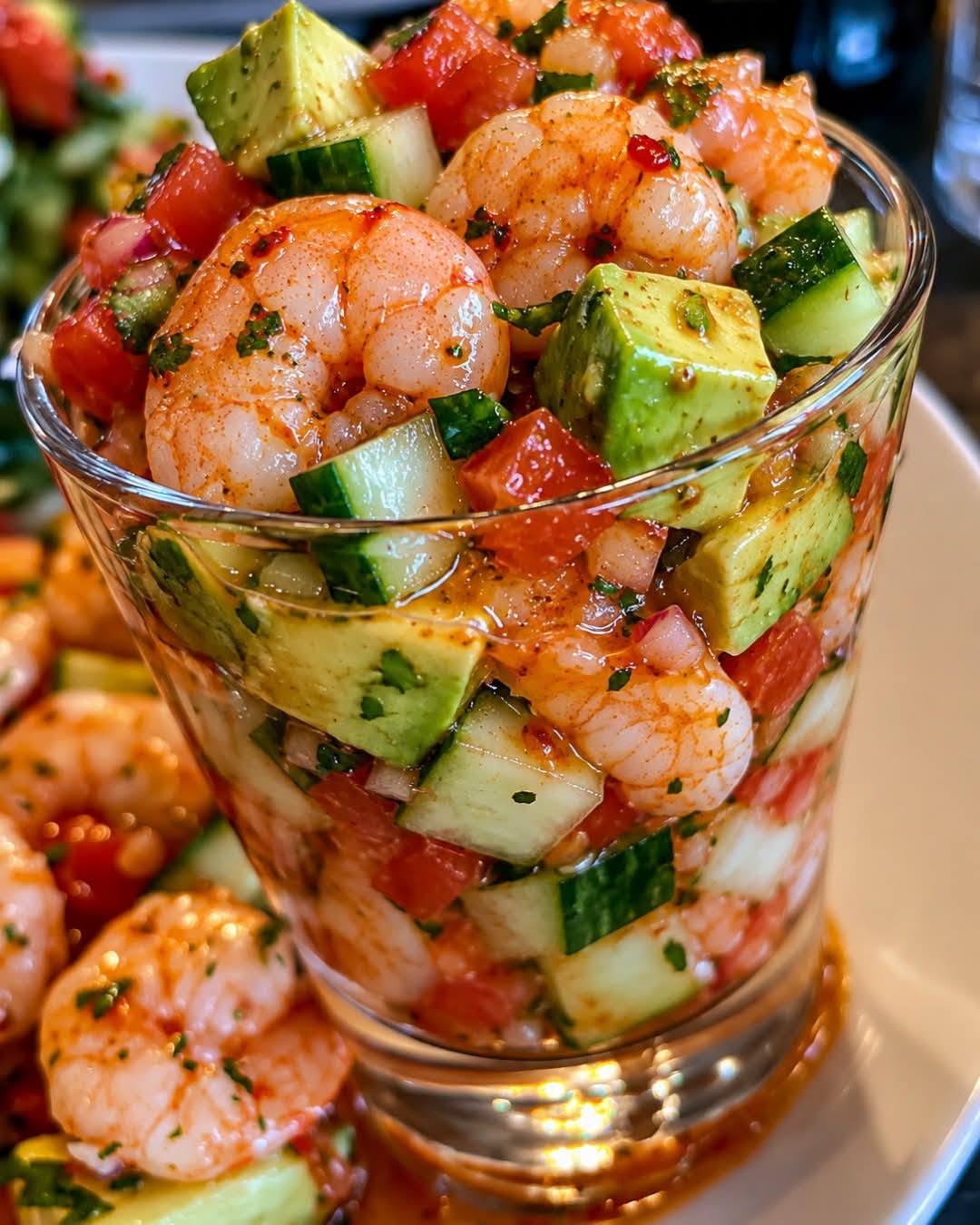
| Prep Time | 20 minutes |
| Marinating / “Cook” Time | 30 minutes |
| Total Active Time | 50 minutes |
| Culinary Intensity | Beginner to Intermediate (Focus on knife skills & fresh citrus extraction) |
| Flavor Profile | Bright, acidic, savory, subtly spicy, and rich |
| Yield | 4 to 6 servings |
| Dietary Suitability | Gluten-Free, Dairy-Free, Low-Carb, High-Protein, Pescatarian |
Equipment Needed
-
1 large glass, ceramic, or non-reactive mixing bowl (avoid aluminum or copper)
-
1 sharp chef’s knife
-
1 citrus squeezer
-
1 colander
-
1 cutting board
-
1 slotted spoon
Ingredients
The Seafood Base
-
1 lb (450 g) raw medium shrimp (peeled, deveined, tails removed, cut into 1/2-inch bite-sized pieces)
-
3/4 cup fresh lime juice (approx. 6–8 juicy Persian or Key limes)
-
1/4 cup fresh lemon juice (approx. 1–2 standard lemons)
-
1/4 cup fresh orange juice (approx. 1 navel orange; balances the sharp acidity with natural sweetness)
The Fresh Aromatics & Produce
-
2 medium Roma tomatoes (seeded and finely diced to avoid excess water)
-
1 medium English cucumber (peeled, seeded, and diced into 1/4-inch cubes)
-
1/2 medium red onion (finely minced)
-
1 to 2 fresh jalapeño or serrano peppers (ribs and seeds discarded for mild heat, or retained for higher intensity; finely minced)
-
1/2 cup fresh cilantro leaves (finely chopped, stems mostly trimmed)
-
2 ripe Hass avocados (peeled, pitted, and cut into 1/2-inch cubes)
Seasonings & Finishing
-
1 tsp coarse kosher salt (plus extra to taste)
-
1/4 tsp freshly cracked black pepper
-
1 tbsp extra virgin olive oil (optional, provides silky mouthfeel and rounds out sharp citrus)
-
Tostadas or salted tortilla chips (for serving)
Ingredient Deep-Dive: Science of the Cure
Traditional ceviche relies on a biochemical phenomenon known as acid denaturation. When raw seafood sits in concentrated citrus juice, the citric acid drops the pH, unwinding and re-bonding the protein strands. This alters the structure from translucent and soft to opaque and firm—effectively mimicking the textural transformation of heat cooking without applying temperature.
To maximize texture:
-
Fresh Citrus is Mandatory: Bottled lime juice contains chemical preservatives, lacks lively volatile aromatics, and yields a dull, acrid flavor.
-
Non-Reactive Vessels: Always use glassware, glazed ceramic, or food-grade stainless steel. Reactive metals such as raw aluminum or cast iron leach a metallic off-taste into acid-heavy dishes.
Step-by-Step Directions
1. Prepare and Par-Cook the Shrimp (Optional Blanch Safeguard)
If using ultra-fresh, sashimi-grade shrimp, you may jump directly to cold curing. For standard thawed or market-fresh shrimp, a quick 60-second blanch eliminates food safety concerns while preserving succulent texture:
-
Bring 4 cups of salted water to a rapid boil.
-
Drop in the peeled, deveined, chopped shrimp for exactly 60 seconds until just pink on the exterior.
-
Immediately drain and plunge into an ice-water bath for 2 minutes to halt carryover cooking. Drain thoroughly on paper towels.
2. The Citrus Cure
-
Place your prepped raw or blanched shrimp into a large glass bowl.
-
Pour the freshly squeezed lime juice, lemon juice, and orange juice directly over the seafood. Ensure the shrimp pieces are fully submerged.
-
Cover tightly with plastic wrap and transfer to the refrigerator.
-
Timing Intensity:
-
Blanched Shrimp: Chill for 15 to 20 minutes to absorb citrus depth.
-
Raw Shrimp: Chill for 30 to 45 minutes until completely opaque, milky-white, and firm to the touch. Do not let it soak past 2 hours, or the flesh will break down and turn rubbery.
-
3. Mince and Prep the Aromatics
While the shrimp cures:
-
Finely dice the red onion. Chef’s Tip: Submerge minced red onion in cold water for 5 minutes, then drain; this removes sulfurous pungency while keeping crunch.
-
Seed and cube the tomatoes and cucumber.
-
Mince the jalapeños and chop the cilantro.
4. Assemble the Base
-
Remove the bowl from the refrigerator. With a slotted spoon, check that the shrimp is fully opaque.
-
Pour off roughly half of the excess citrus juice so the salad remains moist and saucy without drowning out other flavors.
-
Gently fold in the drained red onion, diced cucumber, diced Roma tomatoes, minced jalapeño, and fresh cilantro.
-
Sprinkle with kosher salt, cracked black pepper, and drizzle with extra virgin olive oil. Toss gently to combine.
5. Fold in the Avocado & Chill
-
Gently fold the cubed Hass avocado into the mixture just before serving to keep the pieces intact and prevent the acid from oxidizing them into puree.
-
Taste test a spoonful with a chip. Adjust seasoning with an extra pinch of salt or a splash of reserved lime juice if needed.
-
Let sit at cold room temperature for 5 minutes to let the flavors marry.
Chef’s Storage & Serving Recommendations
-
How to Serve: Dish the ceviche into chilled glass bowls or wide martini glasses. Serve accompanied by crisp corn tostadas, salted artisan tortilla chips, or chilled plantain chips.
-
Storage: Ceviche is best enjoyed within 2 to 4 hours of assembly. Leftovers can be kept in an airtight glass container in the refrigerator for up to 24 hours. Note that the avocado will soften and the shrimp will gradually become firmer as it sits in residual acid.
Detailed Nutritional Breakdown
Calculated per serving (based on 4 generous main servings, excluding chips/tostadas).
| Metric | Amount Per Serving | % Daily Value* |
| Calories | 265 kcal | — |
| Total Fat | 14 g | 18% |
| – Saturated Fat | 2 g | 10% |
| – Monounsaturated Fat | 9 g | — |
| – Polyunsaturated Fat | 2 g | — |
| Cholesterol | 170 mg | 57% |
| Sodium | 680 mg | 30% |
| Total Carbohydrates | 12 g | 4% |
| – Dietary Fiber | 6 g | 21% |
| – Total Sugars | 4 g | — |
| Protein | 26 g | 52% |
| Potassium | 690 mg | 15% |
| Vitamin C | 42 mg | 47% |
| Vitamin A | 680 IU | 14% |
| Calcium | 95 mg | 7% |
| Iron | 2.1 mg | 12% |