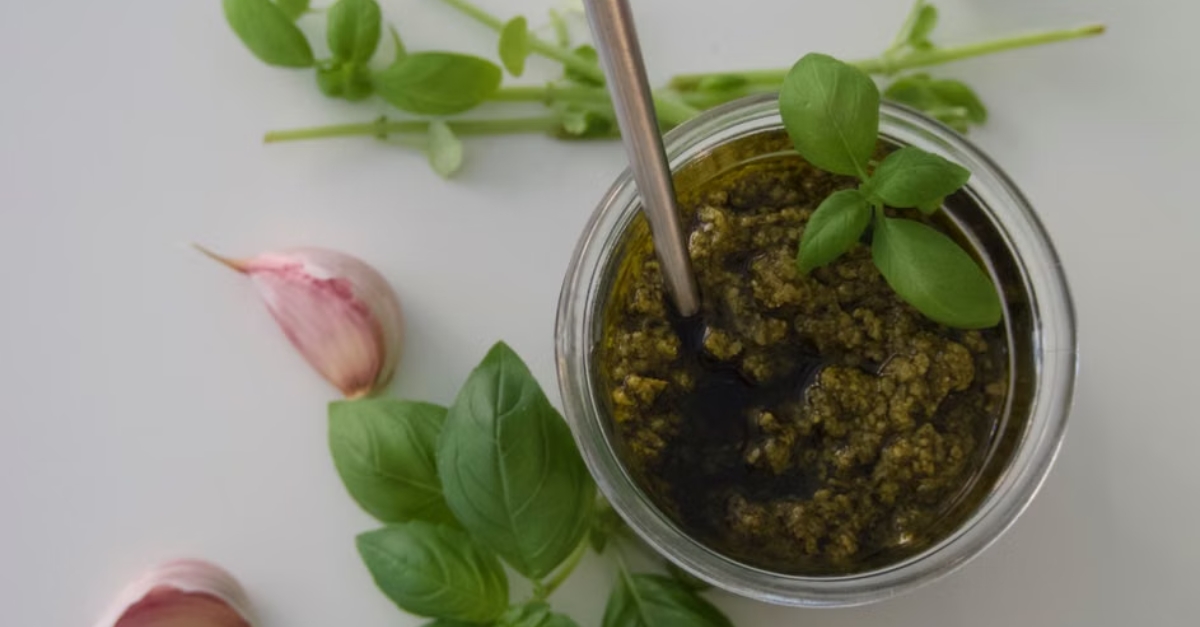
| Prep Time | 15 minutes |
| Cook Time | 0 minutes |
| Total Time | 15 minutes |
| Yield | Approx. 1.25 cups (6 servings) |
| Skill Level | Beginner to Intermediate |
| Intensity Level | Low (No heating required; focus is on delicate emulsion and color retention) |
Equipment Needed
-
Primary: Food processor (or marble mortar and wooden pestle for traditional method)
-
Secondary: Rubber spatula, measuring cups and spoons, fine-mesh colander, salad spinner or paper towels
Ingredients
-
Fresh Basil Leaves: 2 packed cups (approx. 50–60g / 2 oz) Genovese sweet basil (stems removed, washed, and thoroughly dried)
-
Pine Nuts (Pinoli): 3 tablespoons (approx. 30g / 1 oz) raw or lightly toasted and completely cooled
-
Parmigiano-Reggiano: ½ cup (approx. 50g / 1.75 oz) freshly finely grated
-
Pecorino Romano: 2 tablespoons (approx. 15g / 0.5 oz) freshly finely grated
-
Garlic: 1 small-to-medium clove peeled and germ removed if bitter
-
Extra Virgin Olive Oil: ½ cup (120 ml / 4 fl oz) high quality, cold-pressed, preferably Ligurian or mild fruity EVOO
-
Coarse Sea Salt: ½ teaspoon (or to taste)
Step-by-Step Instructions & Technique Intensities
Step 1: Prep the Herbs & Ingredients
-
Wash the fresh basil in cold water and submerge gently.
-
Transfer the leaves to a salad spinner or dry completely between layers of paper towels. Intensity Note: It is critical that the leaves are 100% dry; residual water dilutes flavor, ruins the emulsion, and accelerates browning.
-
Finely grate the Parmigiano-Reggiano and Pecorino Romano cheeses using a microplane or fine box grater.
Step 2: Pulse the Base
-
Place the garlic clove, pine nuts, and coarse sea salt into the bowl of a food processor fitted with a steel blade.
-
Intensity: Medium-High (Pulse Mode) — Pulse 8 to 10 times until the nuts and garlic form a coarse, uniform paste. Scrape down the sides with a rubber spatula.
Step 3: Add the Basil
-
Add the completely dry basil leaves to the food processor.
-
Intensity: Low-Medium (Short Pulses) — Pulse in short, 1-second bursts about 10 to 12 times. You want to chop the basil finely without running the machine continuously.
Pro Tip: Over-processing or continuous blending creates friction heat, which oxidizes the basil and turns the vibrant green color into an unappealing dark olive brown.
Step 4: Emulsify with Olive Oil
-
With the machine running on Low Intensity, slowly stream in the extra virgin olive oil in a steady, thin drizzle through the top feed tube.
-
Process just until the oil incorporates and a rough, cohesive sauce forms (approx. 15–20 seconds). Stop immediately—do not over-blend.
Step 5: Fold in the Cheese & Final Adjustments
-
Remove the blade or transfer the pesto base to a medium mixing bowl.
-
Add the grated Parmigiano-Reggiano and Pecorino Romano cheeses.
-
Intensity: Manual Low — Gently fold the cheese into the mixture using a rubber spatula until combined.
-
Taste and adjust seasoning with a tiny pinch of salt if necessary. (Note: Pecorino is naturally salty, so taste before adding extra salt).
Serving Suggestions & Pairings
-
Classic Ligurian Pasta: Toss with trofie, trenette, or linguine. For authentic Genoa style, boil diced Yukon Gold potatoes and cut green beans directly in the pasta water during the last 5 minutes, then toss everything together with pesto diluted with a splash of starchy pasta water.
-
Gourmet Spreads: Spread over warm focaccia, sourdough toast, caprese sandwiches, or grilled chicken breasts.
-
Soups & Finishing: Swirl a generous spoonful into minestrone soup or roasted tomato soup right before serving.
Storage, Preservation & Color Retention
-
Refrigeration: Store pesto in an airtight glass jar. Pour a thin layer (approx. ¼ inch) of extra virgin olive oil over the top surface to seal out air and prevent oxidation. Cover tightly and refrigerate for up to 5 to 7 days.
-
Freezing: Pesto freezes exceptionally well. For best results, freeze pesto in silicone ice cube trays. Once solid, pop the cubes into a freezer-safe zip-top bag for up to 3 months. (Optional: Leave the cheese out when making pesto to be frozen, and fold fresh cheese in after thawing).
Nutritional Information
Servings per recipe: 6 | Serving Size: Approx. 2 tablespoons (35g)
| Nutritive Element | Amount Per Serving | % Daily Value* |
| Calories | 210 kcal | — |
| Total Fat | 21 g | 27% |
| Saturated Fat | 4 g | 20% |
| Monounsaturated Fat | 13.5 g | — |
| Polyunsaturated Fat | 2.5 g | — |
| Cholesterol | 8 mg | 3% |
| Sodium | 260 mg | 11% |
| Total Carbohydrates | 2 g | 1% |
| Dietary Fiber | 0.6 g | 2% |
| Total Sugars | 0.3 g | — |
| Protein | 4 g | 8% |
| Calcium | 115 mg | 9% |
| Iron | 0.8 mg | 4% |
| Vitamin A | 480 IU | 10% |