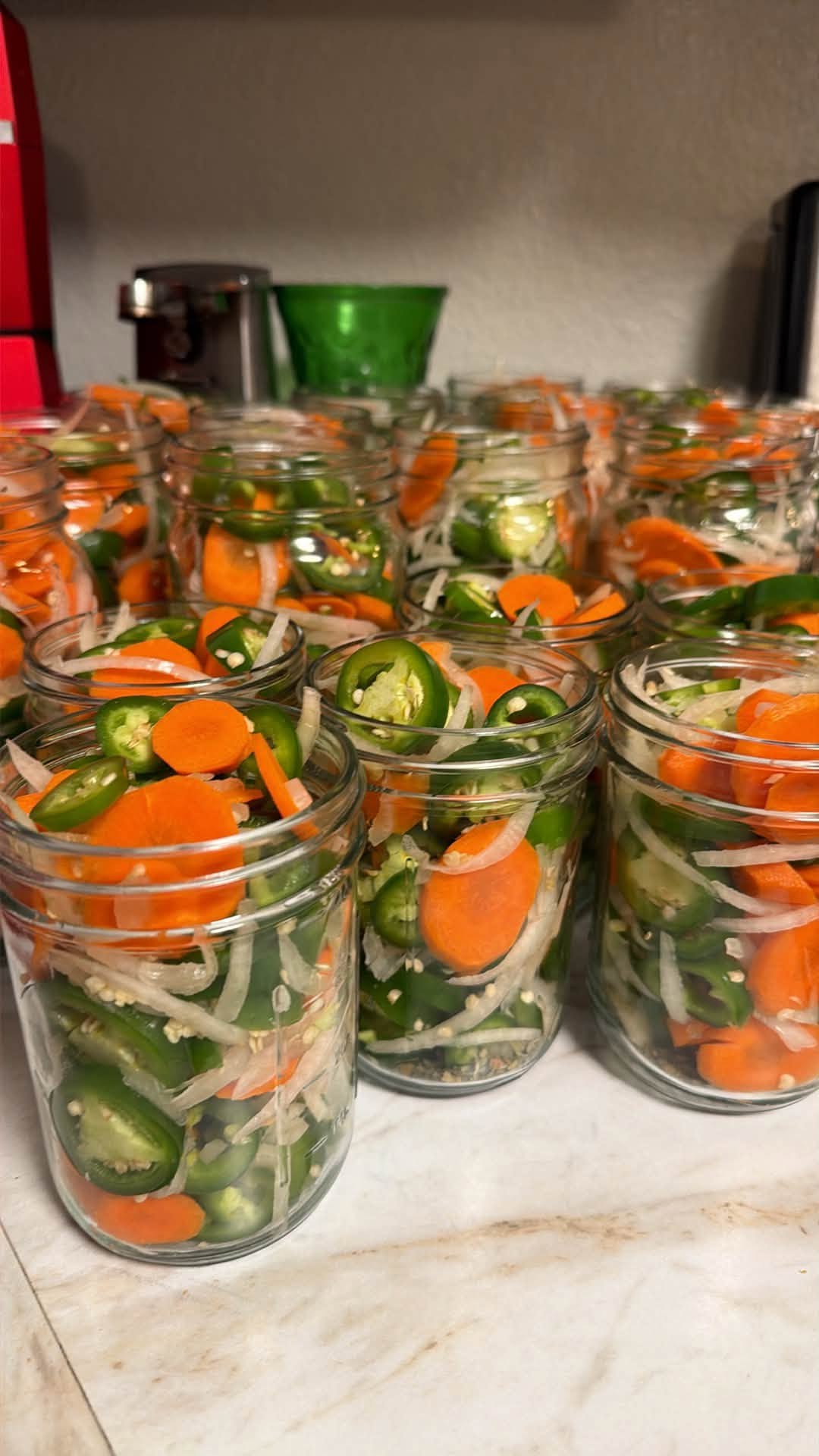
Prep time: 20 minutes
Cook time: 10 minutes
Cooling & Pickling time: 30 minutes minimum (best after 24 hours)
Total time: ~1 hour active + chilling
Yield: 1 large jar (about 6–8 servings)
Ingredients
For the Brine:
-
1 ½ cups distilled white vinegar
-
1 ½ cups water
-
3 tablespoons olive oil (or neutral oil)
-
2 teaspoons kosher salt
-
1 tablespoon granulated sugar
-
4 cloves garlic, peeled and lightly smashed
-
2 bay leaves
-
1 teaspoon dried Mexican oregano
-
½ teaspoon black peppercorns (optional)
For the Vegetables:
-
4–5 medium carrots, peeled and sliced into ¼-inch thick rounds or diagonal coins
-
4–6 jalapeño peppers, sliced into rings (seeds and membranes left in for heat; remove for milder)
-
½ small white onion, thinly sliced
-
½ small head cauliflower, cut into small florets (optional, but classic)
-
2–3 radishes, thinly sliced (optional)
Instructions
1. Prepare the Vegetables
Wash and peel the carrots. Slice them into uniform rounds—about ¼-inch thick. If they’re too thick, they’ll stay raw and crunchy; too thin, and they’ll turn mushy. Slice the jalapeños into rings. Thinly slice the onion. If using cauliflower, break it into bite-sized florets. Set everything aside.
2. Build the Brine
In a medium saucepan, combine the vinegar, water, olive oil, salt, sugar, garlic, bay leaves, oregano, and peppercorns. Bring to a rolling boil over high heat, then reduce to a simmer. Let it bubble for 2–3 minutes until the salt and sugar dissolve completely. The oil will float on top—that’s expected and traditional.
3. Blanch the Carrots (Optional but Recommended)
If you prefer tender-crisp carrots rather than fully raw, add the carrot slices to the simmering brine for 2–3 minutes. They should soften slightly but retain bite. Remove them with a slotted spoon and set aside. If you want maximum crunch, skip this step entirely.
4. Pack the Jar
In a large, clean glass jar (or a non-reactive bowl with a tight lid), layer the carrots, jalapeños, onion, and cauliflower. Pour the hot brine over the vegetables, ensuring everything is submerged. The vegetables will shrink slightly as they absorb the liquid, so pack them snugly.
5. Cool and Refrigerate
Let the jar cool to room temperature—about 30–45 minutes. Once cooled, seal it and refrigerate. The escabeche is technically ready after 30 minutes, but the flavors truly bloom after 24 hours. For the best balance of tang, heat, and crunch, wait at least overnight.
Recipe Notes & Tips
-
Texture matters: The contrast of crunchy vegetables against the soft heat of the jalapeño is the point. Don’t overcook the carrots.
-
Adjust the heat: For a milder escabeche, remove the seeds and white pith from the jalapeños. For a truly fiery version, leave them intact or add a serrano or two.
-
Oil is traditional: The olive oil isn’t just for flavor—it also helps carry the fat-soluble flavors of the oregano and pepper. Don’t omit it.
-
Uses: Serve alongside tacos, tortas, grilled chicken, or beans. It’s also excellent chopped into salads or piled onto a quesadilla.
Storage & Shelf Life
Escabeche is a refrigerator pickle—it is not shelf-stable without proper canning. Keep it in a sealed glass jar, fully submerged in brine, in the refrigerator.
How long does it last? Recommendations vary depending on the source and the specific vegetable mix:
-
1 week: Some sources suggest keeping it for just one week to preserve peak freshness and texture .
-
2 weeks: Many classic recipes recommend up to two weeks for the best flavor and safety .
-
1 month or more: Other sources claim it can last up to a month, or even 1–2 months in a well-sealed glass jar, though the vegetables will soften over time .
A practical guideline: Plan to eat it within 2 weeks for the best crunch and brightest flavor. If you want it to last longer, ensure the jar is airtight, the vegetables are always covered by brine, and you use clean utensils every time you reach into the jar.
Nutrition
Note: These values are estimates based on standard ingredient amounts. Actual nutrition will vary based on the specific vegetables used and how much brine is consumed.
Per serving (approximately ½ cup, assuming 6 servings):
-
Calories: ~70–85 kcal
-
Total Fat: ~4–5 g
-
Saturated Fat: ~0.5 g
-
Sodium: ~400–500 mg
-
Total Carbohydrates: ~7–9 g
-
Dietary Fiber: ~2–3 g
-
Sugars: ~4–5 g
-
Protein: ~1 g