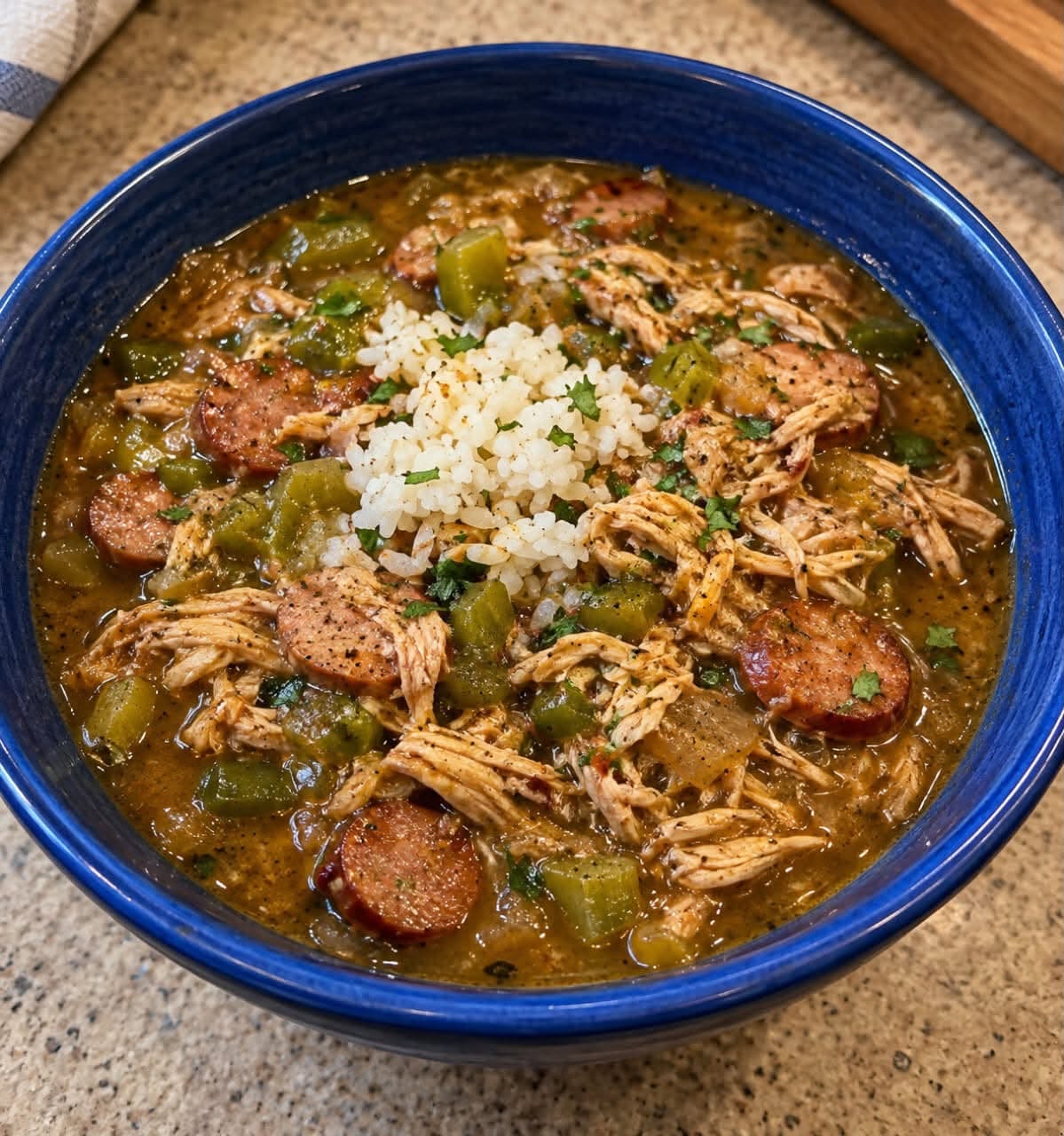
Prep Time: 30 Minutes
Cook Time: 2 Hours 30 Minutes
Total Time: 3 Hours
Ingredients
For the Roux:
-
1 cup all-purpose flour
-
1 cup vegetable oil (or canola oil)
For the Gumbo:
-
1 large yellow onion, diced
-
1 large green bell pepper, diced
-
3-4 celery stalks, diced
-
4 cloves garlic, minced
-
12 oz. andouille sausage, sliced into ¼-inch rounds
-
2 lbs. boneless, skinless chicken thighs, cut into bite-sized pieces
-
8 cups (2 quarts) chicken stock or broth
-
2 bay leaves
-
1 tbsp. Creole seasoning (like Tony Chachere’s)
-
1 tsp. dried thyme
-
1 tsp. smoked paprika
-
½ tsp. cayenne pepper (adjust to taste)
-
1 tbsp. Worcestershire sauce
-
Salt and freshly cracked black pepper, to taste
-
½ cup green onions, thinly sliced (for garnish)
-
¼ cup fresh parsley, chopped (for garnish)
-
Cooked white rice, for serving
Instructions
Part 1: The Foundation – Making the Roux (Time: 45-60 minutes | Intensity: High)
The roux is the single most important element of a great gumbo. It is a mixture of equal parts flour and fat cooked until it reaches a deep, dark brown color. This process is not about thickening as much as it is about creating a deep, toasted, nutty flavor that defines the dish. Do not rush this step. A burnt roux will ruin the entire pot, and a light roux will result in a flavorless gumbo.
-
Set Up: In a large, heavy-bottomed pot or Dutch oven (at least 6-8 quarts), combine the 1 cup of oil and 1 cup of flour. Whisk them together until smooth.
-
Turn on the Heat: Place the pot over medium heat. You want a steady, consistent heat. The key is to adjust the temperature as needed; you may need to lower it to medium-low to prevent burning.
-
The Constant Stir: This is your workout. Using a long-handled whisk or a wooden spoon, stir the mixture constantly. Do not walk away. The flour will burn in seconds if left unattended. Scrape the bottom and corners of the pot to ensure nothing sticks and burns.
-
Watch the Color Change: The roux will go through several stages. First, it will bubble and look like a thick, pale paste. After about 15-20 minutes, it will begin to darken to a peanut butter color. This is a good time to have your diced vegetables ready.
-
The Final Push: Continue stirring. The roux will progress from peanut butter to a milk chocolate color, and finally, to a dark chocolate or mahogany color. This final stage can happen quickly. Your goal is a dark, rich brown, similar to an espresso bean. The entire process should take anywhere from 45 to 60 minutes. If you see black specks, you have burned it and must start over.
-
The “Holy Trinity” Drop: As soon as the roux reaches the desired dark color, immediately add all the diced onion, bell pepper, and celery (the Holy Trinity). Be careful, as the mixture will sizzle and steam vigorously. Stir the vegetables into the roux. This immediately stops the cooking process and prevents the roux from burning. Continue to cook and stir for about 5-7 minutes until the vegetables have softened.
Part 2: Building the Gumbo (Time: 20 minutes | Intensity: Medium)
Now we build the layers of flavor.
-
Add the Aromatics: Add the minced garlic, Creole seasoning, thyme, smoked paprika, and cayenne pepper to the pot. Stir and cook for 1 minute until fragrant.
-
Brown the Sausage: Add the sliced andouille sausage. Stir and cook for 5-7 minutes, allowing the sausage to brown slightly and render some of its flavorful fat.
-
Sear the Chicken: Add the chicken thigh pieces. Stir to combine and cook for 5-8 minutes, just until the chicken is mostly opaque on the outside. It doesn’t need to be cooked through at this point, as it will simmer later.
Part 3: The Simmer (Time: 1 Hour 30 minutes | Intensity: Low)
This is the “low and slow” phase where all the flavors meld together into something magical.
-
Add the Liquid: Slowly pour in the chicken stock, stirring constantly to prevent lumps from forming. Add the bay leaves and Worcestershire sauce.
-
Bring to a Boil, then Simmer: Increase the heat to medium-high and bring the gumbo to a gentle boil. Once boiling, reduce the heat to low, cover the pot partially, and let it simmer.
-
Skim and Stir: During the first 30 minutes of simmering, skim off any oil or foam that rises to the surface. Stir the gumbo occasionally to ensure it isn’t sticking to the bottom.
-
The Final Simmer: Continue to simmer, uncovered or partially covered, for at least 1 hour, but 1.5 to 2 hours is even better. The longer it simmers, the more developed the flavor will be. If the gumbo becomes too thick, you can add a little more chicken stock or water to reach your desired consistency.
-
Taste and Adjust: After the long simmer, remove the bay leaves. Taste the gumbo and adjust the seasoning with salt and black pepper as needed.
Part 4: Serving and Garnish (Time: 5 minutes | Intensity: Low)
-
Serve: To serve, place a generous scoop of cooked white rice in the bottom of a bowl. Ladle the hot gumbo over the rice.
-
Garnish: Sprinkle each serving with a pinch of sliced green onions and fresh parsley.
-
Enjoy: Serve immediately with a side of crusty French bread and your favorite hot sauce on the table. A cold Abita beer or a glass of sweet tea are perfect accompaniments.
Recipe Notes, Tips, and Variations
-
The Roux Shortcut: If you’re short on time, you can make a “dry roux.” Spread the flour on a baking sheet and toast it in a 400°F (200°C) oven, stirring every 10-15 minutes, until it’s a deep brown color. This can take 45-60 minutes. Then, whisk the toasted flour into the oil in your pot over low heat until a smooth paste forms, and proceed with the recipe. It’s not exactly the same, but it’s a great time-saver.
-
Sausage Matters: Andouille is the traditional choice for a reason. Its coarse texture and smoky, spicy flavor are integral to the dish. If you can’t find it, a good-quality smoked kielbasa can be used as a substitute, but the flavor profile will be different.
-
Make it Your Own:
-
Seafood Gumbo: For the last 10 minutes of simmering, add 1 lb. of peeled shrimp and/or a pint of shucked oysters. Cook just until the shrimp are pink and the oysters are plump and their edges begin to curl.
-
Okra Gumbo: Add 1 lb. of sliced fresh or frozen okra about 30 minutes before the end of the simmering time. Okra acts as a natural thickener.
-
File Powder: Filé powder (ground sassafras leaves) is a traditional thickener and flavoring. It should never be added to the pot while the gumbo is boiling, as it will become stringy. Instead, pass it at the table for individuals to sprinkle into their own bowls.
-
-
Storage and Leftovers: Gumbo is famously better the next day! Store leftovers in an airtight container in the refrigerator for up to 4 days. The flavors will continue to meld. It also freezes beautifully for up to 3 months. To reheat, thaw overnight in the refrigerator and warm gently on the stovetop.
Nutrition Information
Disclaimer: The nutritional information below is an estimate and is provided for informational purposes only. It is calculated using an online nutrition calculator and can vary significantly based on the specific brands of ingredients you use (e.g., sausage, stock), the amount of oil absorbed by the roux, and the serving size. For precise dietary information, please consult a professional nutritionist.
Per Serving (1/10th of recipe, gumbo only, does not include rice):
-
Calories: 480 kcal
-
Total Fat: 32g
-
Saturated Fat: 6g
-
Trans Fat: 0g
-
Cholesterol: 110mg
-
Sodium: 1150mg
-
Total Carbohydrates: 17g
-
Dietary Fiber: 2g
-
Sugars: 3g
-
Protein: 30g