-
Prep Time: 25 Minutes
-
Cook Time: 5 Minutes
-
Chilling Time: 4 Hours (Minimum)
-
Total Time: 4 Hours 30 Minutes
-
Servings: 6 Generous portions
-
Calories: Approx. 380 per serving (see nutrition section below)
Ingredients
To achieve the perfect mousse, quality is paramount. Since chocolate is the star of the show, use the best quality chocolate you can afford. Do not use chocolate chips, as they contain stabilizers that prevent proper melting and setting.
-
7 ounces (200g) High-Quality Dark Chocolate: Look for 60% to 70% cacao. If you prefer a sweeter mousse, use 50%. Chop it into small, uniform pieces to ensure even melting.
-
3 Large Eggs: You will need the yolks and the whites separated. Ensure they are at room temperature. Use very fresh eggs.
-
1/4 Cup (50g) Granulated Sugar: Divided into two portions (2 tablespoons for yolks, 2 tablespoons for whites).
-
1 Cup (240ml) Heavy Whipping Cream: Must be cold. Do not substitute with half-and-half or milk; the fat content is necessary for whipping.
-
1 Teaspoon Pure Vanilla Extract: Adds depth to the chocolate flavor.
-
1/4 Teaspoon Fine Sea Salt: Enhances the flavor profile.
-
Optional Garnish: Flaky sea salt, fresh raspberries, chocolate shavings, or a dollop of unsweetened whipped cream.
Equipment Needed
-
Heatproof Bowl: For melting chocolate over a bain-marie (double boiler).
-
Saucepan: To hold the simmering water.
-
Electric Hand Mixer or Stand Mixer: While you can whisk by hand, it requires significant stamina. An electric mixer is recommended for the egg whites and cream.
-
Spatula: Essential for folding.
-
Fine-Mesh Strainer: Optional, but useful for sifting cocoa powder if garnishing.
-
Serving Glasses or Ramekins: 6 small jars or glasses for individual servings.
Instructions
Phase 1: Preparing the Chocolate Base (Intensity: Low)
1. Melt the Chocolate:
Set up your double boiler. Fill a saucepan with about an inch of water and bring it to a gentle simmer. Place a heatproof bowl over the saucepan, ensuring the bottom of the bowl does not touch the water. Add the chopped chocolate. Stir occasionally with a spatula until the chocolate is completely melted and smooth. Once melted, remove the bowl from the heat and stir in the vanilla extract and salt. Let it cool slightly for 2-3 minutes.
2. Temper the Egg Yolks:
While the chocolate cools, separate your eggs. Place the yolks in a medium bowl and the whites in a large, clean, dry bowl (metal or glass is best; plastic can retain oils that prevent whipping). Add 2 tablespoons of sugar to the yolks and whisk vigorously until the mixture is pale yellow and slightly thickened.
3. Combine:
Pour the warm (not hot) melted chocolate into the yolk mixture. Whisk constantly until fully incorporated. The mixture will become thick and glossy. Set this aside to cool to room temperature. Tip: If the chocolate is too hot, it will scramble the eggs. If it’s too cold, it will seize. Room temperature is the sweet spot.
Phase 2: The Air (Intensity: High)
4. Whip the Egg Whites:
Using a clean whisk attachment, beat the egg whites on medium-low speed until they become frothy. Add the remaining 2 tablespoons of sugar gradually. Increase the speed to medium-high and whip until stiff, glossy peaks form. The whites should hold their shape when the whisk is lifted but should not look dry or clumpy. This is the “soul” of your mousse.
5. Whip the Cream:
In a separate cold bowl, pour the cold heavy cream. Whip on medium-high speed until medium-stiff peaks form. Be careful not to over-whip; if the cream turns grainy, you are on your way to making butter. It should be thick and hold its shape but still look smooth and creamy.
Phase 3: The Art of Folding (Intensity: Medium)
This is the most critical step. “Folding” is a technique used to combine a light, airy mixture (whipped cream/egg whites) with a heavier mixture (chocolate base) without deflating the air you just incorporated.
6. Sacrifice a Scoop:
Take about one-third of the whipped egg whites and add them to the chocolate base. Using a spatula, stir this in vigorously. This “sacrifice” lightens the chocolate base, making it easier to fold in the rest without deflating it.
7. Fold the Egg Whites:
Add the remaining egg whites to the chocolate mixture. Using your spatula, cut down the center of the mixture, scrape the bottom of the bowl, and fold the mixture over itself. Rotate the bowl a quarter turn and repeat. Stop as soon as the white streaks disappear. Do not over-mix.
8. Fold the Cream:
Gently fold in the whipped cream in two additions, using the same technique. The final mixture should be uniform in color, airy, and hold its shape. If it looks runny, you have deflated it; if it looks lumpy, you haven’t folded enough.
Phase 4: Chilling and Serving (Intensity: None)
9. Chill:
Spoon the mousse into individual serving glasses or ramekins. Tap the glasses gently on the counter to release any large air bubbles. Cover with plastic wrap and refrigerate for at least 4 hours, preferably overnight. The mousse needs time to set and for the flavors to marry.
10. Serve:
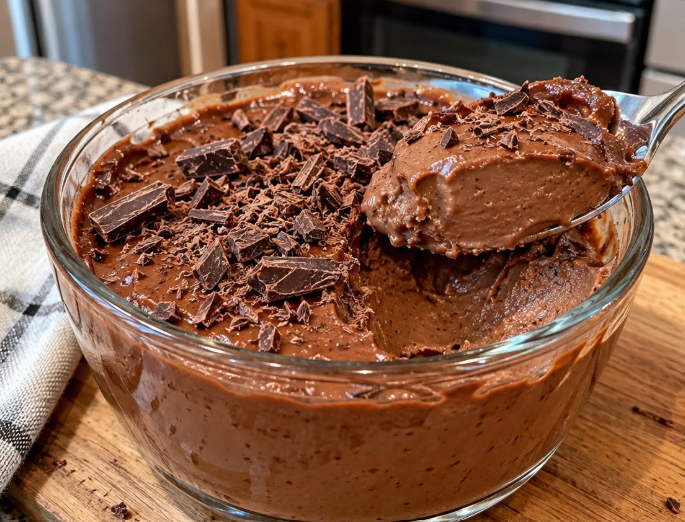
Remove from the refrigerator 10 minutes before serving. Garnish with a raspberry, a sprinkle of flaky sea salt, or chocolate shavings. Serve cold.
Recipe Notes and Variations
-
Flavor Twists:
-
Espresso Mousse: Add 1 teaspoon of instant espresso powder to the melted chocolate for a mocha kick.
-
Orange Mousse: Add 1 teaspoon of orange zest to the chocolate base.
-
Spicy Mousse: Add a pinch of cayenne pepper or cinnamon to the chocolate.
-
-
Safety Note: This recipe contains raw eggs. While the risk of salmonella is low with fresh, clean eggs, it is a consideration for pregnant women, the elderly, or those with compromised immune systems.
-
Texture Troubleshooting:
-
Grainy Mousse: This usually happens if the chocolate seized (got wet) or if the eggs scrambled. You can try to save it by blending it with a little warm milk, but the texture will be denser.
-
Runny Mousse: If it doesn’t set, it means the cream or eggs weren’t whipped enough, or they were deflated during folding. You can freeze it for a semifreddo-style dessert.
-
Nutrition Facts
Note: The following nutritional information is an estimate based on standard ingredients and is provided for informational purposes only. It is calculated per serving (assuming 6 servings).
-
Calories: 380 kcal
-
Total Fat: 30g
-
Saturated Fat: 17g
-
Cholesterol: 145mg
-
Sodium: 85mg
-
Total Carbohydrates: 24g
-
Dietary Fiber: 2g
-
Total Sugars: 20g
-
Protein: 6g
-
Vitamin D: 2% DV
-
Calcium: 4% DV
-
Iron: 15% DV
-
Potassium: 220mg