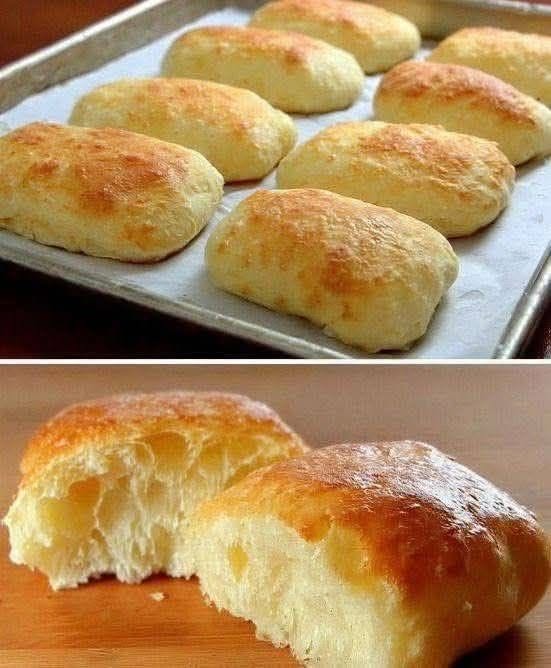
| Prep Time | 15 minutes |
| Rest Time | 2 hours |
| Bake Time | 20–25 minutes |
| Total Time | 2 hours 40 minutes |
| Yield | 12 rolls |
| Difficulty | Easy |
| Category | Bread / Side Dish |
| Cuisine | American |
| Method | Baking |
Why You’ll Love This Recipe
There’s nothing quite like the smell of fresh bread filling your kitchen, and these no-knead rolls deliver that experience without any of the intimidating technique. If you’ve ever been nervous about working with yeast, this is the recipe for you. There’s no kneading, no fancy equipment, and no guesswork. You simply stir the ingredients together, let time do the work, shape the dough, and bake.
The result is a batch of pillowy, tender rolls with a lightly crisp golden crust and a soft, fluffy interior. They’re perfect alongside soups and stews, ideal for holiday dinners, and absolutely unbeatable when split open and spread with butter while still warm. Best of all, the dough is forgiving—if you’re running behind, it can rest a little longer without any harm.
Ingredients
For the Dough
-
4 cups (500 g) all-purpose flour, plus extra for dusting
-
2¼ teaspoons (1 packet / 7 g) active dry yeast
-
2 tablespoons (25 g) granulated sugar
-
1½ teaspoons fine salt
-
1¼ cups (300 ml) warm water (about 110°F / 43°C)
-
¼ cup (60 ml) whole milk, warmed
-
¼ cup (56 g) unsalted butter, melted and slightly cooled
-
1 large egg, room temperature
For Brushing
-
2 tablespoons (28 g) unsalted butter, melted
Optional Toppings
-
Flaky sea salt
-
Fresh chopped rosemary or parsley
-
Sesame seeds
Equipment
-
Large mixing bowl
-
Wooden spoon or spatula
-
Plastic wrap or clean kitchen towel
-
9×13-inch baking pan or two 9-inch round cake pans
-
Parchment paper (optional)
-
Pastry brush
Instructions
Step 1: Activate the Yeast (5 minutes)
In a large mixing bowl, combine the warm water, warm milk, and sugar. Sprinkle the yeast over the top and stir gently. Let it sit for 5 minutes until foamy. If the yeast doesn’t foam, it’s likely expired—start again with fresh yeast.
Intensity: Low
Step 2: Mix the Dough (5 minutes)
Add the melted butter, egg, and salt to the yeast mixture and whisk to combine. Add the flour all at once and stir with a wooden spoon until a shaggy, sticky dough forms. There’s no need to knead—just make sure all the flour is incorporated.
Intensity: Low
Step 3: First Rise (1 hour)
Cover the bowl with plastic wrap or a clean towel and place it in a warm, draft-free spot. Let the dough rise for 1 hour, or until doubled in size.
Intensity: None (passive)
Step 4: Shape the Rolls (10 minutes)
Grease your baking pan or line it with parchment paper. Lightly flour your work surface and your hands. Turn the dough out and gently deflate it. Divide it into 12 equal pieces. To shape each roll, pull the edges of a piece toward the center, then flip it over and cup your hand around it, rolling gently against the counter until smooth and round. Place the rolls in the prepared pan, spacing them evenly.
Intensity: Low to Medium
Step 5: Second Rise (45 minutes)
Cover the pan loosely with a towel and let the rolls rise for 45 minutes, or until puffy and nearly doubled.
Intensity: None (passive)
Preheat your oven to 375°F (190°C) during the last 15 minutes of this rise.
Step 6: Bake (20–25 minutes)
Brush the tops of the rolls gently with melted butter. If desired, sprinkle with flaky salt, herbs, or sesame seeds. Bake for 20–25 minutes, until the tops are deep golden brown and the rolls sound hollow when tapped.
Intensity: Low
Step 7: Finish and Cool (10 minutes)
Remove the rolls from the oven and brush them immediately with the remaining melted butter. Let them cool in the pan for 5 minutes, then transfer to a wire rack. Serve warm.
Intensity: Low
Tips for Success
-
Water temperature matters. Too hot and it kills the yeast; too cool and the yeast won’t activate. Aim for 110°F (43°C)—warm to the touch, like bathwater.
-
Don’t over-flour. The dough should be soft and slightly sticky. Adding too much flour makes dense rolls.
-
Rise in a warm place. An oven with the light on, a microwave with a cup of hot water, or a sunny countertop all work well.
-
For softer crusts, brush with butter right after baking. For crustier tops, skip the final butter brush.
-
Make ahead: After the first rise, cover the dough and refrigerate overnight. Let it come to room temperature for 30 minutes before shaping.
Variations
-
Garlic Herb Rolls: Add 1 teaspoon garlic powder and 1 tablespoon dried Italian herbs to the dough.
-
Honey Whole Wheat: Substitute 1 cup of all-purpose flour with whole wheat flour and swap the sugar for honey.
-
Cheesy Rolls: Fold ½ cup shredded cheddar into the dough before shaping.
-
Dinner Roll Knots: Roll each piece into a 6-inch rope and tie into a loose knot before the second rise.
Storage and Reheating
-
Room Temperature: Store in an airtight container or zip-top bag for up to 2 days.
-
Refrigerator: Up to 5 days in an airtight container.
-
Freezer: Freeze baked rolls in a freezer bag for up to 3 months. Thaw at room temperature.
-
Reheating: Warm in a 300°F (150°C) oven for 5–7 minutes, or microwave for 15–20 seconds.
Nutrition Information
Per roll (based on 12 rolls, without optional toppings)
| Nutrient | Amount |
|---|---|
| Calories | 198 kcal |
| Total Fat | 6.2 g |
| Saturated Fat | 3.6 g |
| Trans Fat | 0.2 g |
| Cholesterol | 28 mg |
| Sodium | 302 mg |
| Total Carbohydrates | 30.4 g |
| Dietary Fiber | 1.1 g |
| Total Sugars | 2.4 g |
| Protein | 4.5 g |
| Vitamin D | 0.2 mcg |
| Calcium | 18 mg |
| Iron | 1.6 mg |
| Potassium | 62 mg |